
Concrete Driveways
New concrete driveways, extensions and crossovers for Nambour homes and hinterland acreage, including steep and long rural driveways. Call Nambour Concreters today!
Learn More →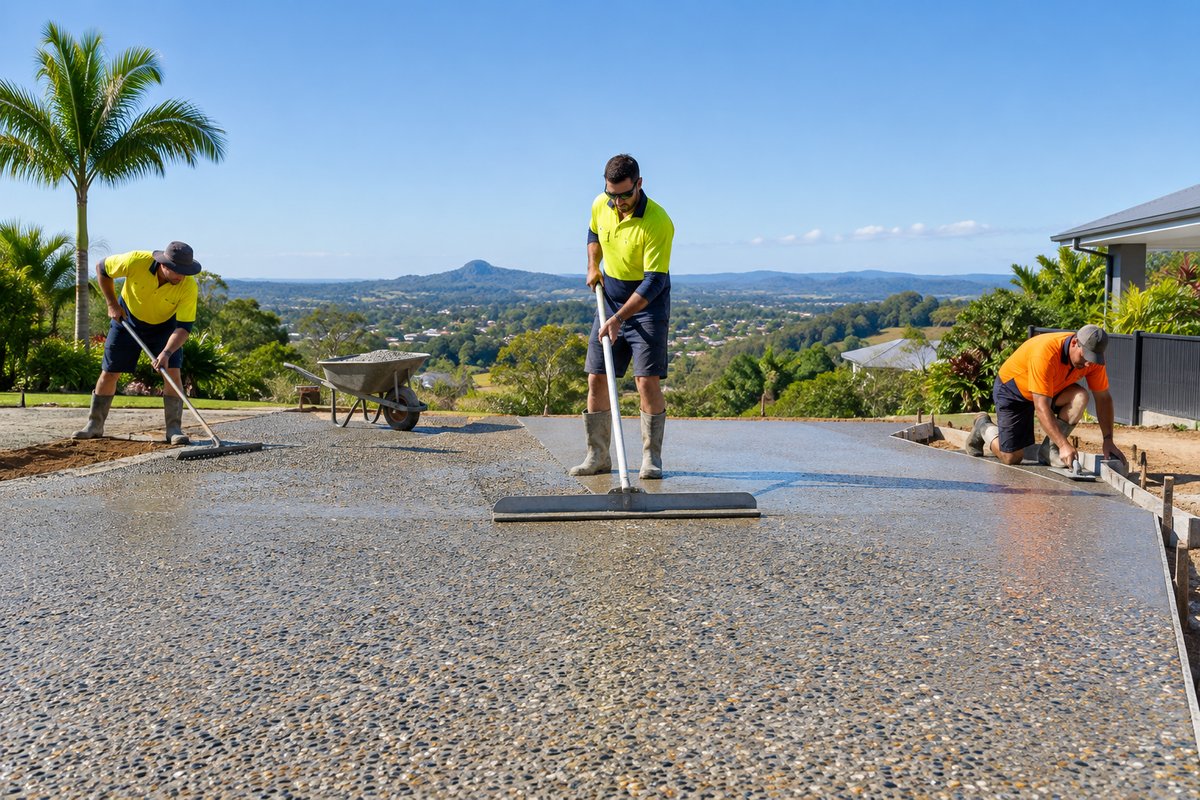
Hard-wearing, slip-resistant exposed aggregate for driveways, paths and pool surrounds across Nambour and the hinterland. Call Nambour Concreters today!
Request a Free Quote
We lay exposed aggregate concrete across Nambour and the surrounding hinterland. It suits homeowners who want a hard-wearing, textured finish that looks better than plain grey. We pour a mix with decorative stone through it, then apply a surface retarder so the top layer of cement paste stays soft while the slab underneath sets. Once the timing is right, we wash that paste away with a pressure washer and stiff brooms to reveal the stone. The result is a grippy, natural-looking surface that hides tyre marks, leaf stains and red dirt far better than a smooth finish.
Local conditions shape how we do every job. Summer storms can dump heavy rain in a short time, so we plan falls, edges and drainage before the boxing goes in. Steep blocks in the hinterland also mean we often place exposed aggregate on concrete driveways where tyre grip matters in wet weather. Reactive clay soils move between wet and dry spells. That is why we compact a proper road base, use steel reinforcement and cut control joints in the right places to manage cracking.
High humidity is hard on decorative concrete. Mould, algae and black lichen spots grow on unsealed or worn surfaces, especially under trees or along shaded side paths. We seal exposed aggregate once it has cured enough, and we choose sealer with our humidity in mind so it does not turn cloudy or white. If you want the same finish carried through your backyard, we can match it on paths and patios so the whole property ties together.
From base preparation to the final seal, here is what happens on site
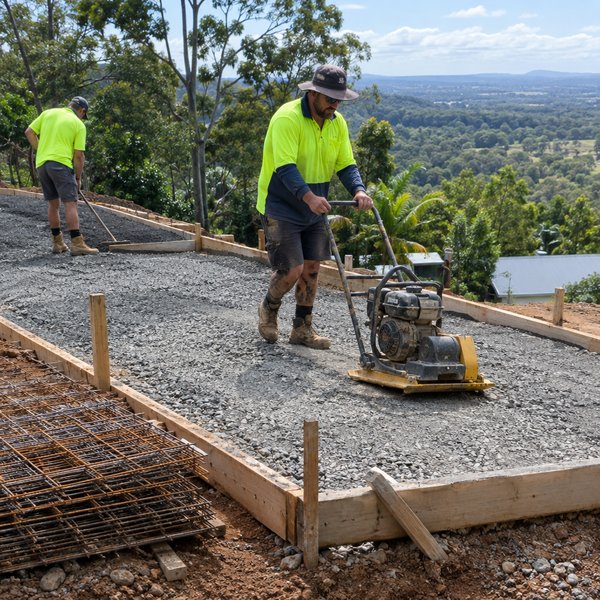
We dig out to the right depth, remove soft soil and compact a crushed road base. We set up formwork to the levels and falls needed to shed storm water away from your house. Reinforcement mesh goes in on bar chairs so it sits in the middle of the slab.
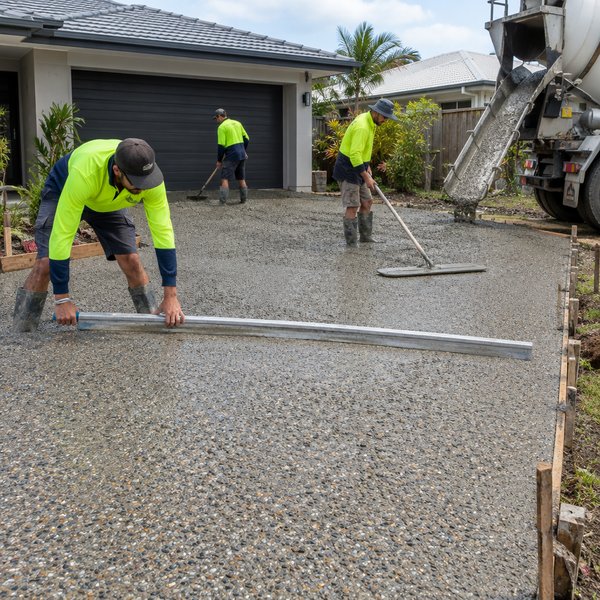
The concrete arrives with your chosen stone blended through it, or we seed extra stone onto the surface for a denser look. We screed it to level, bull float it and tamp the stone just below the surface. Getting the stone evenly spread now decides how good the finished surface looks.
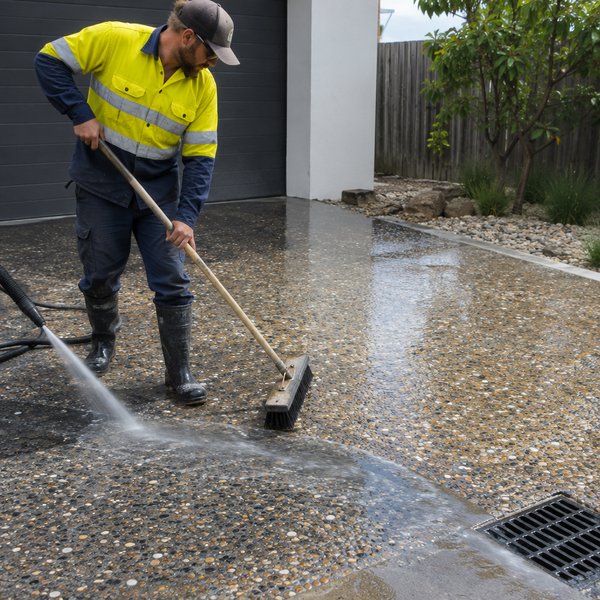
We spray a surface retarder over the fresh concrete so the top layer stays workable while the slab below hardens. When the concrete is ready, we wash the soft paste away with a pressure washer and brooms. Timing matters here, and in humid weather we check the surface closely rather than going by the clock.
We saw cut control joints to guide any shrinkage cracks into straight lines. After curing, we acid wash or clean off any cement haze and let the surface dry properly. We then roll or spray on sealer to bring out the stone colour and protect against mould and staining.
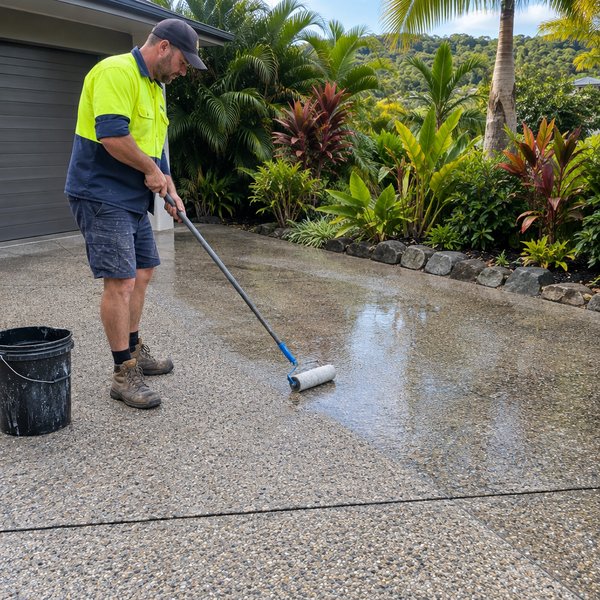
Practical advantages for wet weather, steep driveways and busy households
The exposed stone gives tyres and shoes something to grip. That matters on steep driveways and around pools after a summer downpour. Plain trowelled concrete can get slick when wet, especially once moss starts to grow.
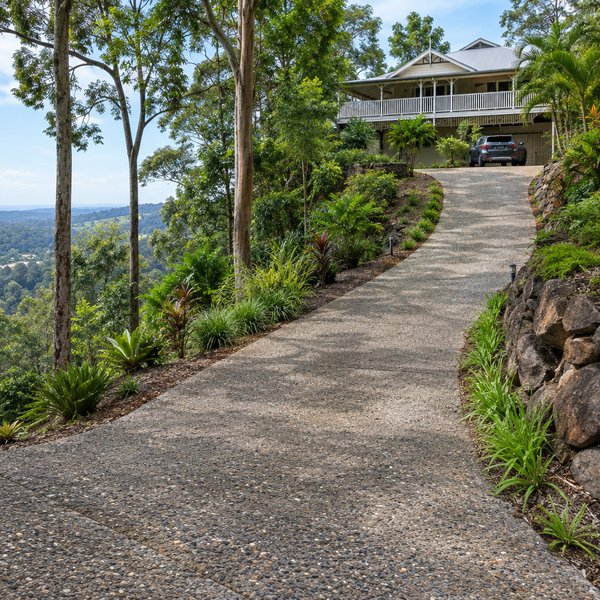
The mix of stone colours disguises tyre marks, oil drips, leaf stains and red soil tracked in from the garden. You spend less time scrubbing to keep it looking clean. Minor scuffs blend into the texture instead of standing out.
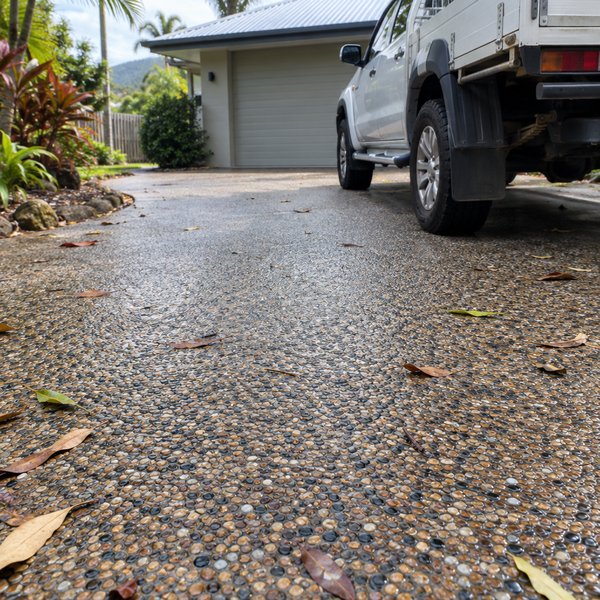
Natural stone sits well with timber Queenslanders, acreage homes and lush gardens. You can carry the same finish from the driveway to paths, patios and pool areas. It adds a finished look to the outdoor spaces you use every day.
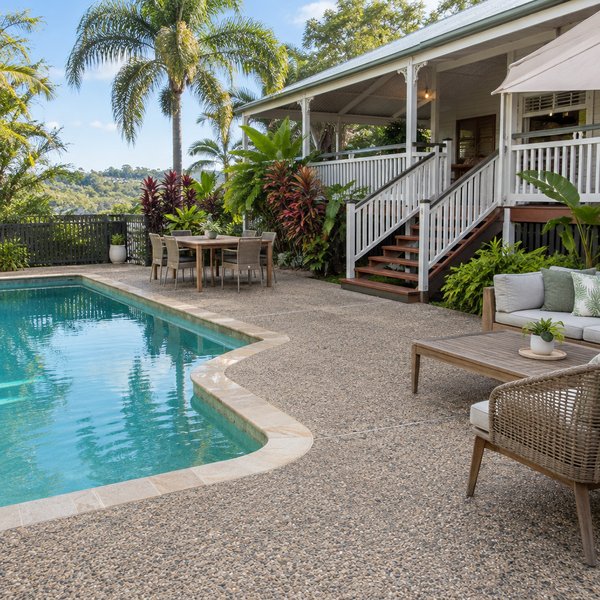
Many local blocks are steep, with clay soils that move between wet and dry spells. We set the base, reinforcement and joints with that in mind. We also plan grip and drainage for driveways that climb a hill.
Wash too early and stones pull out. Wash too late and the paste will not come off evenly. We watch the surface closely on pour day, adjusting for heat and humidity to get a clean, even reveal.
Heavy summer storms will find any low spot. We set falls away from your house and add grated drains or edge details where water needs somewhere to go. If your site needs it, we can also talk you through permeable paving options.
Some sealers go cloudy or white when they trap moisture in humid conditions. We pick products and application timing that suit our climate. That helps your stone stay clear and protected for longer.
Common questions answered
The main factors are the area, site access, how much digging and base work is needed, and the stone you choose. Steep blocks, removing an old driveway or adding drains all add work. We measure on site and give you a written quote based on your actual job.
Not really. The stone has to be in the concrete when it is poured, so an existing slab cannot be washed back to look the same. If your old concrete is cracked or sunken, we can remove it and pour a new exposed aggregate surface.
It depends on the weather, the mix and how the concrete cures. Foot traffic comes well before cars, and heavy vehicles need to wait longest. We will give you clear advice for your job before we leave site.
Our humidity and rain let mould, algae and lichen grow, particularly in shady spots under trees. A good sealer slows this down, and a gentle clean followed by resealing usually brings the surface back. Avoid blasting it with a very high-pressure nozzle up close, as that can damage the sealer and loosen stones.
That depends on sun exposure, traffic, shade and the sealer used. Signs it is due include water soaking in instead of beading, the stone looking dull, or mould returning quickly after a clean. We can inspect it and reseal when it needs it.
We provide Exposed Aggregate throughout Nambour, QLD and surrounding suburbs.
Don't see your area? Contact us to check if we service your location!
View All Areas