
Concrete Driveways
New concrete driveways, extensions and crossovers for Nambour homes and hinterland acreage, including steep and long rural driveways. Call Nambour Concreters today!
Learn More →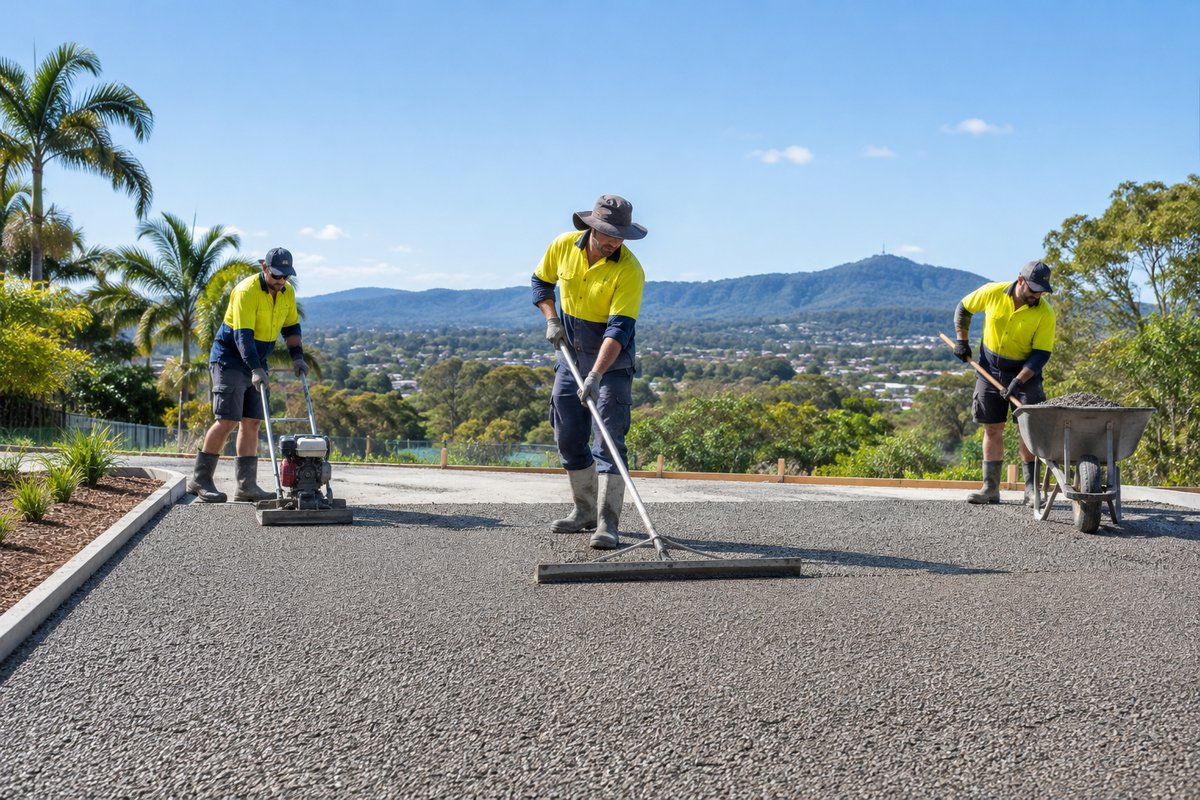
Permeable concrete and paving that lets stormwater soak away, reducing runoff and pooling on Nambour properties. Contact Nambour Concreters today!
Request a Free Quote
Permeable paving in Nambour gives you a hard, usable surface that lets rain soak through instead of sheeting off into your garage or your neighbour's yard. We build it two ways. One is pervious concrete, a no-fines mix with open voids that water drains straight through. The other is permeable interlocking pavers with open joints filled with clean, fine aggregate. Both sit on a deep open-graded crushed rock base that holds stormwater while it slowly drains away.
Summer storms in the hinterland can drop a lot of rain in a short time. Much of the ground around Nambour is clay subsoil that drains slowly once it is wet, and many blocks have a fall toward the house. On a solid slab, that water has nowhere to go. That is why we check your soil and slope before we quote. On heavy clay we often deepen the storage base and run a slotted subsoil drain to a suitable discharge point, so the base empties between storms rather than sitting full.
Most people come to us with a specific problem. It might be a carport that floods every wet season, a parking pad that has turned to mud, or a courtyard where water pools against the back door. Permeable paving works well for these areas, and it can sit beside our standard concrete driveways as a drainage strip or overflow parking. We also tie it into new paths and patios, so the whole yard drains the same way and the levels match.
From soil testing to the final water test, here's what happens on site.
We walk the site, look at where water comes from and where it currently pools, and dig a test hole to see what the subsoil is like. Clay, sandy loam or rock all change how deep the base needs to be and whether a subsoil drain is required. We also look at overhanging trees and nearby garden beds, because leaf litter and mulch are the main causes of clogging.
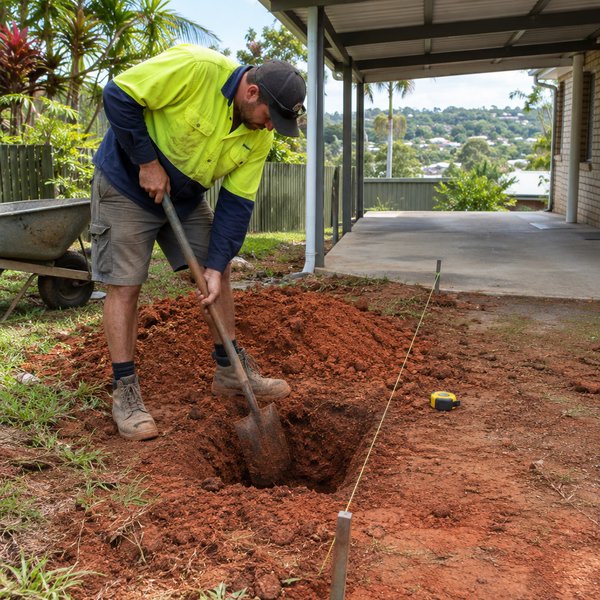
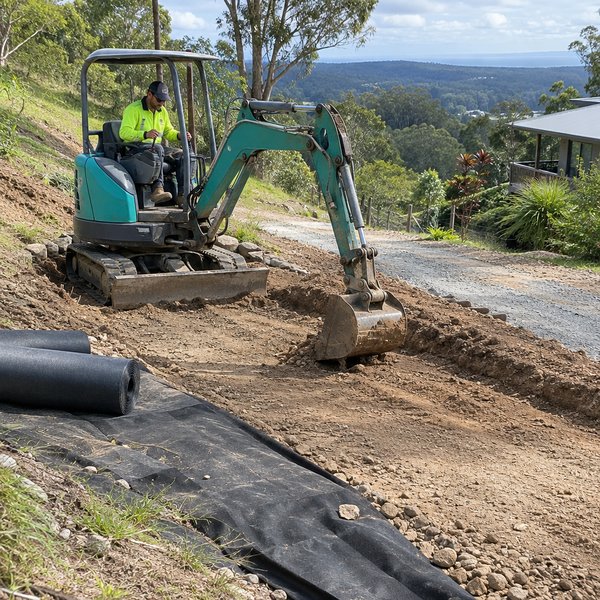
We dig out to the design depth with a small excavator and shape the subgrade to the right fall. The base of the dig is trimmed and compacted lightly, then lined with geotextile fabric so the clay below can't pump up into the rock. Any subsoil drain is laid in at this stage and connected to its outlet.
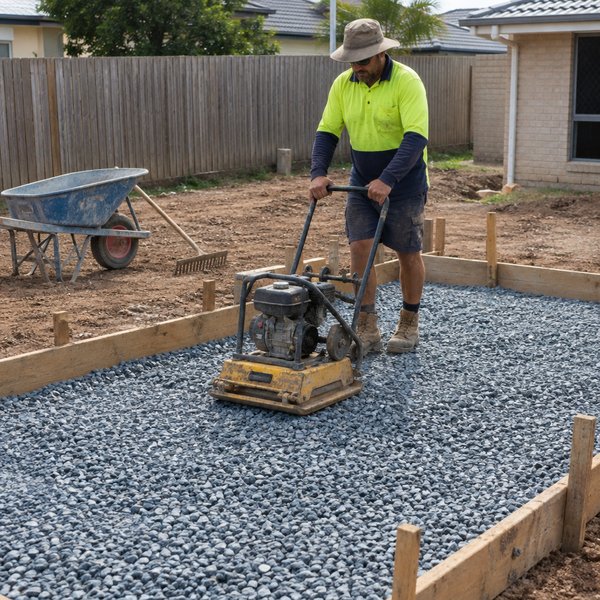
Clean, open-graded crushed rock goes in layers and gets compacted with a plate compactor. This rock has no fines, so it leaves gaps that hold stormwater during a downpour. The edge restraints or formwork are set at this point so the finished levels and falls are locked in.
For pervious concrete, we place the no-fines mix quickly, roll it rather than trowel it so the voids stay open, and cover it with plastic straight away so it cures without drying out in the heat. For pavers, we screed a bedding layer of fine aggregate, lay the pavers to pattern, fill the joints with clean chip and vibrate them in. We finish with a water test to confirm it drains.
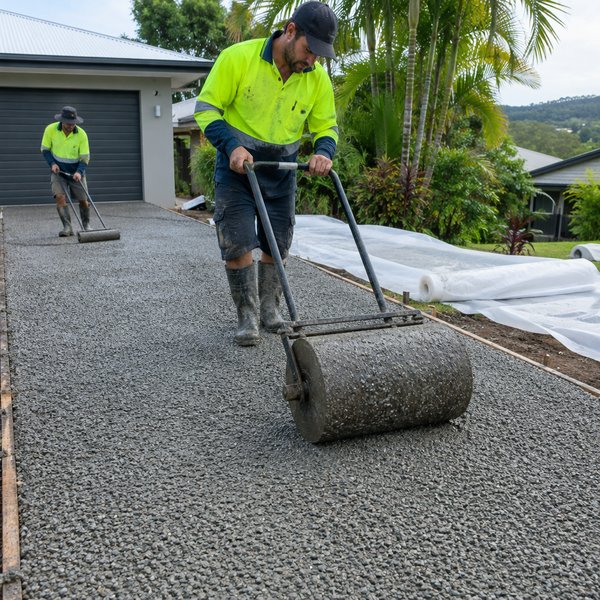
Practical gains for carports, driveways and courtyards that cop heavy summer rain.
Rain soaks into the paving and base instead of running across the surface toward your garage, house or boundary. That means fewer puddles at the car door and less water washing soil and mulch down the slope. On many sites it also takes pressure off overloaded downpipes and pits during heavy summer rain.
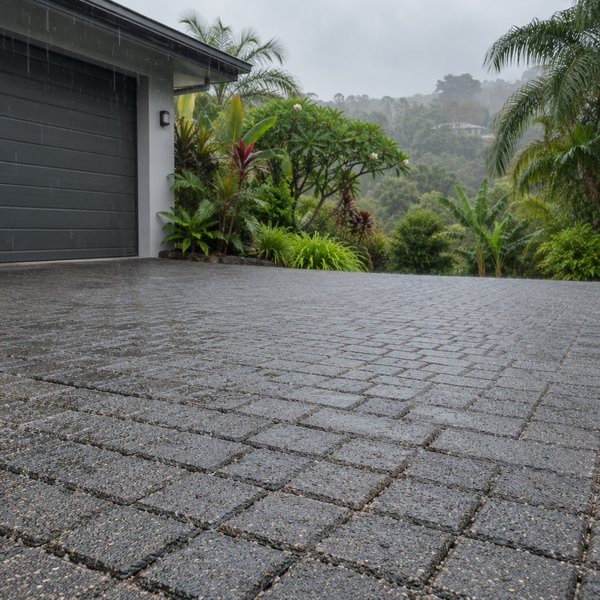
Parking on lawn or loose gravel in a wet climate turns into ruts and mud quickly. Permeable paving gives you a solid surface you can drive, walk and wheel bins across all year. It still drains like open ground, so you get the firmness without the runoff problem.
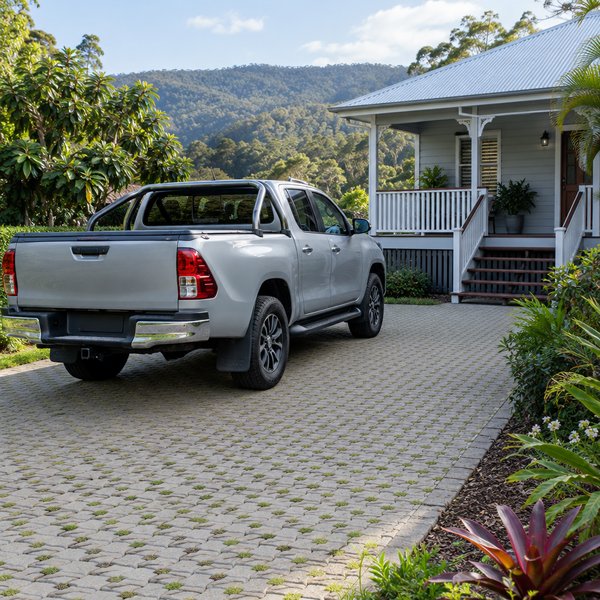
The open surface dries quickly after rain and holds less standing water, which helps with slippery green film in humid weather. Paver areas can also be lifted and relaid if you need access to pipes or services later. That beats cutting and patching a solid slab.
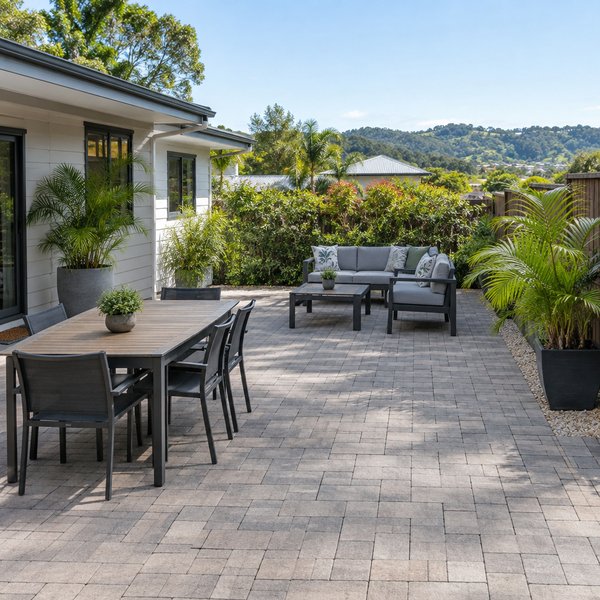
Permeable paving lives or dies on what sits underneath it. We test the subsoil on every job and size the rock base and drainage to suit, rather than using one depth for every block. That matters on the clay and sloping sites common through the hinterland.
No-fines concrete is placed and cured differently from a standard pour. We roll it rather than trowel it, work fast, and cover it straight away so it doesn't dry out in Queensland heat. That keeps the voids open and the surface strong.
We also pour driveways, slabs, paths, patios and exposed aggregate. That means your permeable section can be matched in level, edge detail and colour to the rest of the concrete work. You deal with one team from excavation to clean-up.
Permeable paving isn't the right answer for every spot, such as directly under heavy leaf drop or where garden beds wash onto it. We'll tell you where it works well and where a standard slab with good drainage makes more sense. You get a design that suits how you actually use the space.
Common questions answered
Yes, but it needs to be designed for it. Clay drains slowly, so we usually build a deeper rock base to hold more water and add a slotted subsoil drain so the base empties between storms. We check your soil with a test hole before we give you a design and quote.
Pervious concrete gives a continuous surface and suits driveways and parking pads where you want a plain, solid look. Pavers offer more colour and pattern choices and can be lifted for repairs or service access. We talk through how you use the area, the slope and your budget before recommending one.
The biggest factors are the size of the area, how deep the base needs to be for your soil, and whether you need subsoil drainage. Site access, removal of old concrete or turf, slope and the surface you choose also change the price. We give you an itemised quote after a site visit so you can see where the money goes.
Sweep regularly and don't let leaf litter, mulch or garden soil sit on the surface, especially through autumn and after storms. A wet/dry vacuum or a low-angle rinse pulls fine material out without forcing it deeper. If an older surface has slowed down, we can vacuum it out and refill the joints.
Don't use film-forming sealers on pervious concrete or permeable pavers because they block the pores and stop drainage. Pressure washing straight down can push grit deeper into the voids, so keep the wand at a low angle or use a vacuum. If moss or algae builds up in the humidity, ask us which cleaning method suits your surface.
We provide Permeable Paving throughout Nambour, QLD and surrounding suburbs.
Don't see your area? Contact us to check if we service your location!
View All Areas